Wedding DJ Mistakes to Avoid: 12 Things Couples Get Wrong
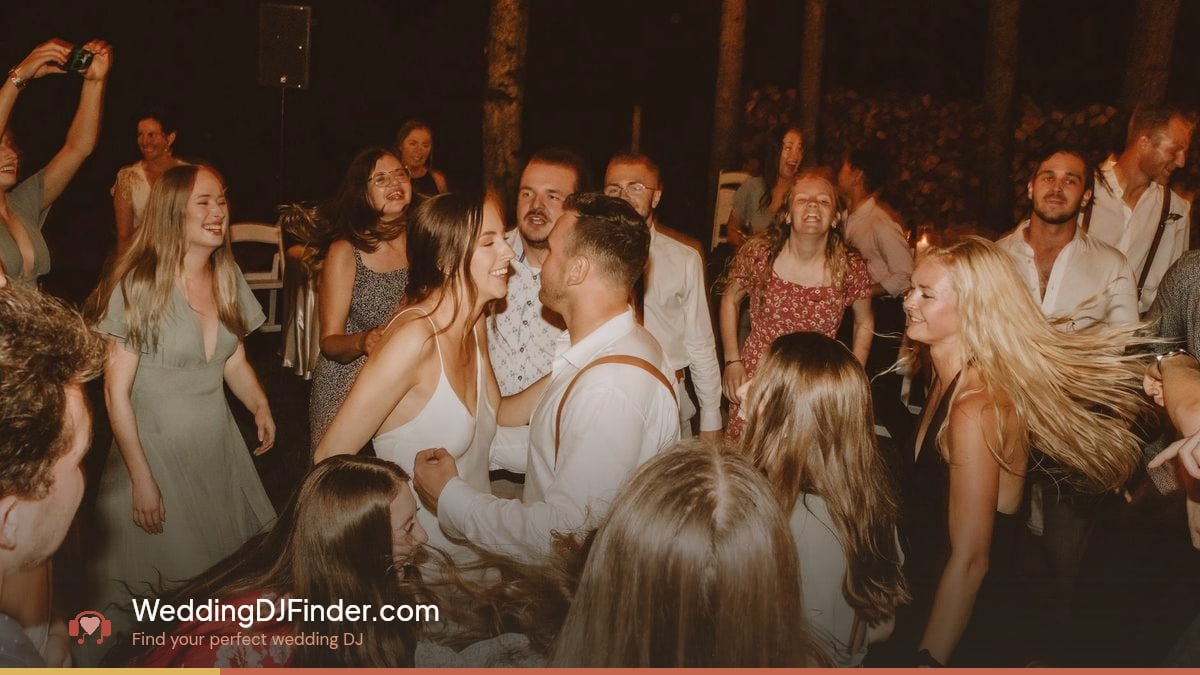
Most wedding DJ horror stories don't start with a bad DJ. They start with a couple who made avoidable mistakes during the search, booking, or planning process. The DJ might have been perfectly fine, but the couple set themselves up for disappointment without realizing it.
After talking to hundreds of DJs and reviewing thousands of wedding recaps, patterns emerge. The same mistakes come up again and again. Here are the 12 most common ones and how to make sure you don't repeat them.
1. Booking Too Late
This is the most common mistake, and it's the one with the most consequences. Professional wedding DJs (the ones with strong reviews, years of experience, and polished operations) book up fast. In peak season (May through October), the best DJs in any given market are fully booked 10 to 14 months in advance for Saturday dates.
When you wait until three or four months before your wedding to start looking, you're choosing from whoever's still available. That pool skews toward newer DJs, part-timers, or professionals who had cancellations. You might get lucky and find someone great. But you've dramatically narrowed your options.
How to avoid it: Start researching DJs as soon as you have a venue and date locked in. Ideally, book your DJ eight to twelve months before the wedding. Start your search early on WeddingDJFinder to see who's available in your area.
2. Choosing Based on Price Alone
We get it, weddings are expensive, and the budget pressure is real. But your DJ is one of the last vendors you should try to save money on. Study after study of post-wedding surveys shows that entertainment is the number-one factor guests remember about a reception. Not the food, not the flowers, not the venue: the entertainment.
A $500 DJ who shows up with a laptop and a single speaker, doesn't plan with you, and plays whatever they feel like is not a deal. It's a liability. The difference between $800 and $1,500 might be $700, which in the context of a $25,000 to $35,000 wedding is less than 3% of your total budget. That 3% has an outsized impact on the guest experience.
How to avoid it: Set your DJ budget based on market rates in your area, not on how cheap you can go. Compare what's included in each quote, not just the bottom-line number.
3. Not Having a Consultation Before Booking
Some couples book a DJ based solely on their website, a few reviews, and an email exchange about pricing. That's like hiring someone for a job based entirely on their resume without an interview.
A consultation (whether in person, on video, or by phone) lets you assess things that no website can communicate: personality, communication style, enthusiasm, listening skills, professionalism, and whether you actually like this person. Your DJ will be the voice of your reception. You need to know if that voice fits.
How to avoid it: Always schedule a consultation before signing anything. If a DJ won't do a pre-booking consult, that's a red flag in itself.
4. Not Getting a Written Contract
This one seems obvious, but it happens more often than you'd think, especially with DJs who are friends-of-friends, family acquaintances, or budget options found through social media.
A verbal agreement is essentially worthless if something goes wrong. Without a contract, you have no recourse if the DJ cancels, shows up late, plays different hours than agreed, or doesn't deliver what was promised. A contract protects both sides.
What the contract should include:
- Date, time, and venue address
- Exact hours of coverage (start and end times)
- What's included (equipment, lighting, mics, MC services)
- Overtime rate
- Deposit amount and payment schedule
- Cancellation and refund policy
- Backup DJ clause (what happens if they can't make it)
- Name of the specific DJ who will perform (if it's a multi-DJ company)
How to avoid it: No contract, no booking. Period. If a DJ doesn't have a standard contract, they're not running a professional operation.
5. Forgetting to Ask Who'll Actually Be There on the Day
This catches couples off guard constantly. You meet with the owner of a DJ company, love their personality and vision, sign the contract, and then a completely different DJ shows up on your wedding day.
Multi-DJ companies are common and legitimate. But you have the right to know who will be behind the booth at your reception. The DJ you meet during the consultation might not be the one performing, and the substitute might have a completely different style, energy level, or experience.
How to avoid it: Ask directly: "Will you personally be the DJ at our wedding?" If the answer is no, ask to meet the DJ who will be, or at minimum, see their reviews and past wedding videos. Get the specific DJ's name in the contract.
6. Over-Controlling the Playlist
There's a difference between curating your wedding music and micromanaging it. Providing a list of 20 to 30 must-play songs and a do-not-play list? That's smart planning. Handing your DJ a rigid, 150-song playlist with no room for improvisation? That's a problem.
Professional DJs read the crowd in real time. They notice when the dance floor is thinning and know which song will pull people back. They see when the energy is peaking and know how to sustain it. When you lock them into a fixed playlist, you take away the skill you're paying them for.
How to avoid it: Provide your must-plays (15-30 songs), your do-not-plays (as many as you want), and a general sense of genres and eras you love. Then trust your DJ to fill in the rest. That's their job, and the good ones are really good at it.
7. Ignoring the Do-Not-Play List
On the flip side, some couples don't think about what they don't want to hear. Then the "Chicken Dance" starts playing, or "Baby Got Back" blasts during the reception, and suddenly you're cringing at your own wedding.
Every couple has songs, genres, or categories they don't want. Maybe you hate line dances. Maybe certain songs have bad associations. Maybe you just don't want explicit lyrics at a family event. If you don't communicate these, your DJ will make their best guess, and their guess might be wrong.
How to avoid it: Create a do-not-play list and give it to your DJ during the planning meeting. Be specific: individual songs, genres, or even general rules ("no explicit lyrics," "no novelty songs," "no country").
8. Not Discussing the Timeline in Detail
Your DJ is the person responsible for keeping your reception on schedule. But they can't do that if you haven't given them a detailed timeline, or if the timeline you've given them is unrealistic.
Common timeline problems:
- Scheduling too many events (toasts, dances, games, traditions) and leaving no time for open dancing
- Not accounting for transitions between reception phases
- Assuming the DJ will "figure it out" without a plan
- Conflicting instructions from the couple, planner, and venue
How to avoid it: Build a detailed reception timeline with your DJ and planner. Account for every segment: introductions, first dance, dinner, toasts, parent dances, open dancing, special traditions, last dance. Share this timeline with every vendor who needs it.
9. Skipping the Venue Walkthrough
Your DJ's performance depends partly on the physical space. Room size affects speaker placement. Ceiling height affects sound quality. Venue noise restrictions affect volume. Power outlet locations affect where equipment can go. Load-in logistics affect setup time.
A DJ who walks into your venue for the first time on your wedding day is figuring all of this out on the fly. A DJ who's visited (or at least seen detailed photos and floor plans) arrives with a plan.
How to avoid it: Ask your DJ if they've worked at your venue before. If not, arrange a walkthrough or at minimum provide detailed photos, floor plans, and venue coordinator contact information. Most professional DJs will request this themselves.
10. Not Coordinating With Other Vendors
Your DJ doesn't operate in isolation. They need to coordinate with:
- Your photographer/videographer: For timing of key moments (first dance, toasts, bouquet toss) so they're in position
- Your planner or coordinator: For timeline adjustments and day-of communication
- Your caterer: For dinner service timing (DJ needs to know when to shift from dinner music to dancing)
- Your venue: For sound restrictions, power access, and curfew
When vendors aren't coordinated, things fall through the cracks. The photographer misses the first dance because nobody told them it was happening early. The DJ starts the party music while dinner is still being served. The caterer clears tables during toasts.
How to avoid it: Create a vendor contact sheet and share it with everyone. Make sure your DJ has your planner's phone number and vice versa. A quick 15-minute coordination call between key vendors a week before the wedding prevents most problems.
11. Not Telling the DJ About Special Circumstances
Every wedding has unique details that affect how the DJ does their job. Common things couples forget to mention:
- Divorced parents who shouldn't be acknowledged together: The DJ needs to know this before making introductions or calling for parent dances.
- Guests with mobility issues: Affects how the DJ manages the dance floor and whether certain interactive songs are appropriate.
- Cultural traditions: If you have specific cultural dances, traditions, or ceremonies, the DJ needs to know well in advance, not five minutes before.
- Sensitive topics: Lost loved ones to honor, songs to avoid because of associations, guests dealing with specific situations.
- Name pronunciations: Your wedding party's names, your new shared last name, anyone being introduced or acknowledged.
How to avoid it: During your planning meeting, go through a "what you need to know" checklist with your DJ. Good DJs will ask about these things proactively, but don't rely on that.
12. Hiring a Friend or Family Member to DJ
Look, your cousin might be a great DJ at house parties. Your college roommate might have impressive Spotify playlists. Your future brother-in-law might own some speakers and a mixer. But hiring them to DJ your wedding is almost always a mistake.
The problems are predictable:
- No accountability. If a professional DJ underperforms, you can leave bad reviews and dispute charges. If your cousin screws up, what are you going to do, not invite them to Thanksgiving?
- No backup plan. Professional DJs have contingency plans for equipment failure, illness, and emergencies. Your friend has... nothing.
- No wedding experience. Playing music at a party and running a wedding reception are fundamentally different skills. The MC work, the timeline management, the crowd reading. These take hundreds of events to develop.
- Relationship strain. If it goes badly, it damages a personal relationship. If it goes well, they spent your wedding working instead of celebrating with you.
How to avoid it: Hire a professional. Let your musically talented friends and family be guests who enjoy the party. If budget is a genuine constraint, a newer professional DJ at $600 to $800 is still a better bet than an amateur for free.
The Common Thread
Notice the pattern? Almost every mistake on this list comes down to one of three things:
- Rushing the process: Not starting early enough, not doing enough research, not having enough conversations before booking.
- Under-communicating: Not sharing your preferences, timeline, special circumstances, or concerns with your DJ.
- Undervaluing the role: Treating the DJ as a commodity rather than a critical vendor who shapes the entire guest experience.
Your wedding DJ is one of the most important hires you'll make. Treat the process with the same seriousness you'd give your photographer or your venue. Do the research, have the conversations, set clear expectations, and then trust the professional you've chosen to deliver.
Bottom Line
Avoiding these 12 mistakes doesn't require any special knowledge or extra budget. It just requires starting early, communicating clearly, and taking the DJ selection process seriously. The couples who do these things overwhelmingly end up with great reception experiences. The ones who don't are the ones writing cautionary tales on Reddit the week after their wedding.
Don't be a cautionary tale. Find a professional wedding DJ on WeddingDJFinder, start the conversation early, and set yourself up for the reception your guests will be talking about for years.
Wedding DJ planning notes
Get practical tips for music, timelines, and questions to ask before you book. If your address is new to us, we will send a confirmation email first.
Read the 2026 Wedding DJ Industry Report for current pricing benchmarks, demand trends, and booking insights.