Wedding DJ Timeline: How to Plan Your Reception Music
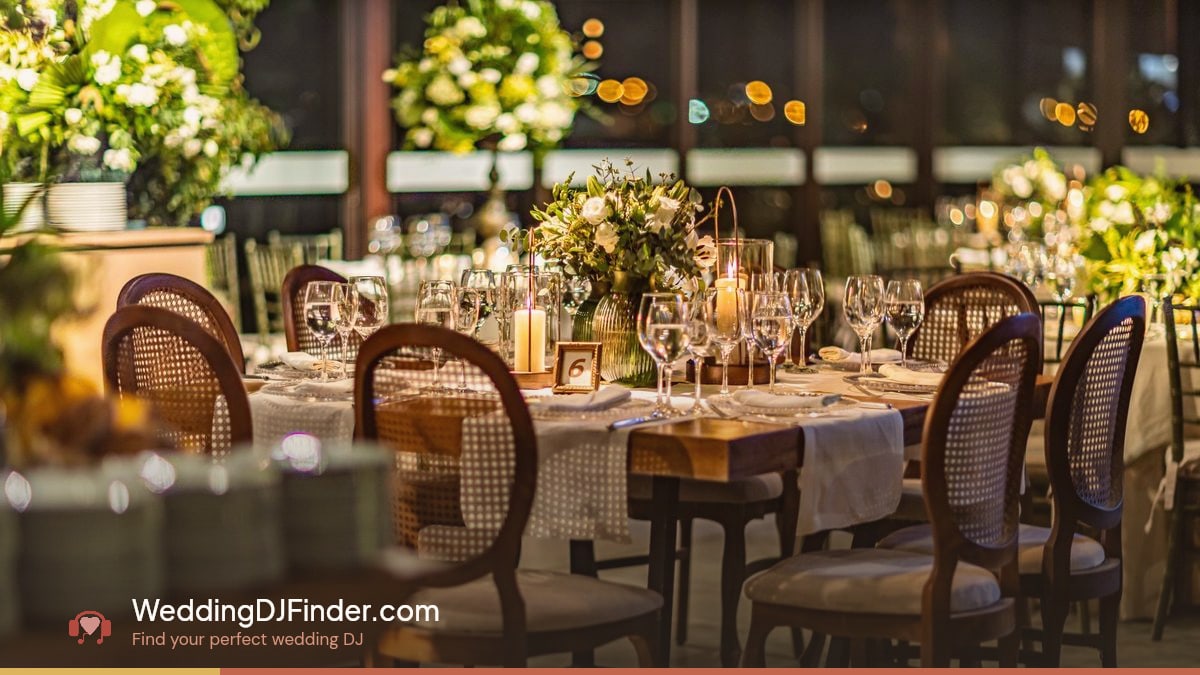
Most couples spend hours planning the look of their reception, flowers, lighting, table settings. Then they hand their DJ a loose playlist and say "keep the party going." That's asking your DJ to do a lot of guesswork.
Your DJ is the one coordinating between your caterer, your photographer, your family, and your guests for the entire reception. Without a clear timeline, they can't do that effectively. They're making judgment calls every fifteen minutes about when to start dinner music, when to cue the cake cutting song, when to transition from background to dancing.
A good DJ can work without a detailed timeline. But they work much better with one.
Here's how to build a reception timeline that gives your DJ everything they need to run a smooth event.
Before You Start: Know Your Venue's Time Block
Every timeline needs a container. Find out from your venue:
- What time can your DJ start loading in?
- When does the venue officially open for guests?
- What time does the venue close, and is there a noise cutoff before that?
- Is there a hard end time, or can you extend by the hour?
Work backward from the close time to build your timeline. If your venue closes at midnight and you want an hour of open dancing at the end, your dinner and formalities need to wrap up by 11 PM.
The Standard Reception Structure
Here's a typical 5-hour reception timeline. Use this as a starting point and adjust based on your venue, guest count, and priorities.
[Note: Times are examples, adjust your specific start time accordingly]
Cocktail Hour (60-90 minutes)
Cocktail hour typically runs while the wedding party is off with the photographer. Guests mingle, get drinks, find the escort card table.
Your DJ plays background music at a conversational volume. The goal is ambiance, not entertainment. Guests shouldn't feel like they're at a concert, they should feel like they're at a very nice party.
What to give your DJ:
- Musical direction for this hour (jazz, acoustic, Motown, etc.)
- Whether you want any announcements during cocktail hour
- Whether there are any cocktail hour activities (lawn games, a live musician for part of it) that affect their role
Typical length: 60 minutes minimum; 90 minutes if photography is taking longer. Ask your photographer how long the portrait session typically runs and build in buffer.
Grand Entrance (10-15 minutes)
The grand entrance is your DJ's first real MC moment. They announce each member of the wedding party by name, building energy as they go, and close with your introduction as a married couple.
Walk-in songs can be serious (one emotional song for everyone) or playful (different songs for each groomsmen pair, building to a climax). Talk through which approach you want.
Give your DJ:
- A written list of every name in the wedding party, spelled phonetically
- The specific song(s) for the entrance
- Whether you want the couple announced separately or with the last pair of the party
The phonetic spelling matters more than you think. Nothing deflates a grand entrance like a DJ butchering your MOH's name.
First Dance (5-10 minutes)
Immediately following the entrance in most timelines, guests are already on their feet and paying attention.
What to decide in advance:
- Is the first dance for the couple only, or do you invite everyone to join partway through?
- Is there a specific moment in the song where you want the invitation extended?
- Are you doing a choreographed dance, and does your DJ have the exact recording you rehearsed to?
A choreographed first dance almost always needs the original recording, not a live version, not a DJ mix. Make sure your DJ has the right file.
Typical length: 3-4 minutes (one song). Some couples do a short song followed by a transition into the parent dances.
Parent Dances (10-15 minutes)
Father-daughter and mother-son dances typically follow the first dance. You can do them back-to-back without breaks, or your DJ can make a brief announcement before each one.
Some families combine both parent dances into a single song with both couples on the floor. Others invite all parents and grandparents to join at the end. Either approach is fine, just tell your DJ the plan.
What to give your DJ:
- The song for each dance
- Whether they're back-to-back or with announcements between
- Whether there's a group join at the end
Welcome and Blessing (5 minutes)
Many couples have a parent, grandparent, or officiant offer a blessing or welcome before dinner. This is a good time for your DJ to hand off the mic briefly before fading back into dinner music.
If you're doing a welcome, confirm with your DJ:
- Who is speaking and roughly when
- Whether they need a handheld mic or if the speaker has their own
Dinner Service (60-90 minutes)
Dinner is the longest stretch of the reception where your DJ isn't the center of attention. Background music plays softly while guests eat, the catering staff works, and people have actual conversations.
This is also when most toasts happen. Coordinate with your DJ and your caterer on toast timing, typically best to do toasts after the first course is cleared or during the main course.
Give your DJ:
- The order of toasts and who is speaking
- Whether you want music playing quietly during toasts or fully faded
- Musical direction for dinner (same vibe as cocktail hour, or a specific direction)
A common mistake: letting toasts run without a plan. Give each speaker a guideline (3-5 minutes), and brief your DJ on who's going when so they can manage the mic handoffs smoothly.
Buffer tip: Build 15 extra minutes into your dinner estimate. Catering service always takes longer than expected with larger guest counts.
Cake Cutting (5 minutes)
A brief, easy tradition. Your DJ plays a short song, announces the cake cutting, and transitions back to dinner or directly into dancing depending on where you are in the timeline.
Classic cake cutting songs: "How Sweet It Is" (James Taylor), "Sugar" (Maroon 5), "Pour Some Sugar on Me" (if you want to lean into the joke).
Open Dancing (90-120 minutes minimum)
The dance floor opens after dinner and formalities are done. This is the main event.
Your DJ needs maximum flexibility here. Give them your general musical direction, your must-play list, and your do-not-play list, and then let them read the room. The best DJs adjust their setlist in real time based on who's dancing, what's working, and when the energy needs a push.
What to communicate in advance:
- Key "must-play" songs (be realistic, keep it under 10-15)
- Do-not-play list
- Whether guest requests are allowed, and if so, how they should handle them
- Any genre boundaries or preferences
Don't over-program the dance floor. Handing your DJ a 60-song playlist and expecting them to play it in order is how you end up with a rigid, predictable reception that loses the room. Trust them to be a professional.
See our playlist guide for specific song suggestions for every segment.
Bouquet and Garter Toss (10-15 minutes, if applicable)
These work best during open dancing, usually about an hour into it, when the floor is already full and the energy is high. Your DJ will MC both traditions and manage the music transitions.
Tell your DJ in advance whether you're doing both, one, or neither. If you're skipping the garter toss but doing the bouquet toss, they need to know.
Last Dance and Send-Off (10-15 minutes)
As you approach the final 15 minutes of your reception, your DJ will begin winding toward the last dance. This is your final moment on the floor as a married couple, make it count.
Some couples keep the last dance private (just the two of you, guests watching). Others invite everyone to join. Some end with a high-energy song that peaks and sends everyone out the door cheering.
Talk to your DJ about how you want to end the night. It's a detail that's easy to forget in the planning process, and it makes a big difference in how the reception feels when it's over.
Delivering the Timeline to Your DJ
Once your timeline is drafted, send it to your DJ at least two weeks before the wedding. Include:
- Ceremony and reception venue addresses (and load-in instructions)
- Complete run of show with times
- Song list for each segment with notes
- Names (spelled phonetically) for the grand entrance
- Vendor contact list (caterer, photographer, planner)
- Your cell phone number for day-of
The best results happen when your DJ walks into your reception already knowing the plan, not learning it in real time.
Finding a DJ Who Can Execute It
A well-planned timeline only works if your DJ can execute it. When you're searching for wedding DJs, ask specifically about their timeline coordination process and how they work with other vendors.
Search for wedding DJs in your area and read reviews from couples who talk specifically about how the reception flow went. Then dig into song selection with our complete playlist guide.
A great reception doesn't happen by accident. Find a DJ who knows how to run one.
Wedding DJ planning notes
Get practical tips for music, timelines, and questions to ask before you book. If your address is new to us, we will send a confirmation email first.
Read the 2026 Wedding DJ Industry Report for current pricing benchmarks, demand trends, and booking insights.