Wedding DJ vs. Live Band: Which Is Right for Your Reception?
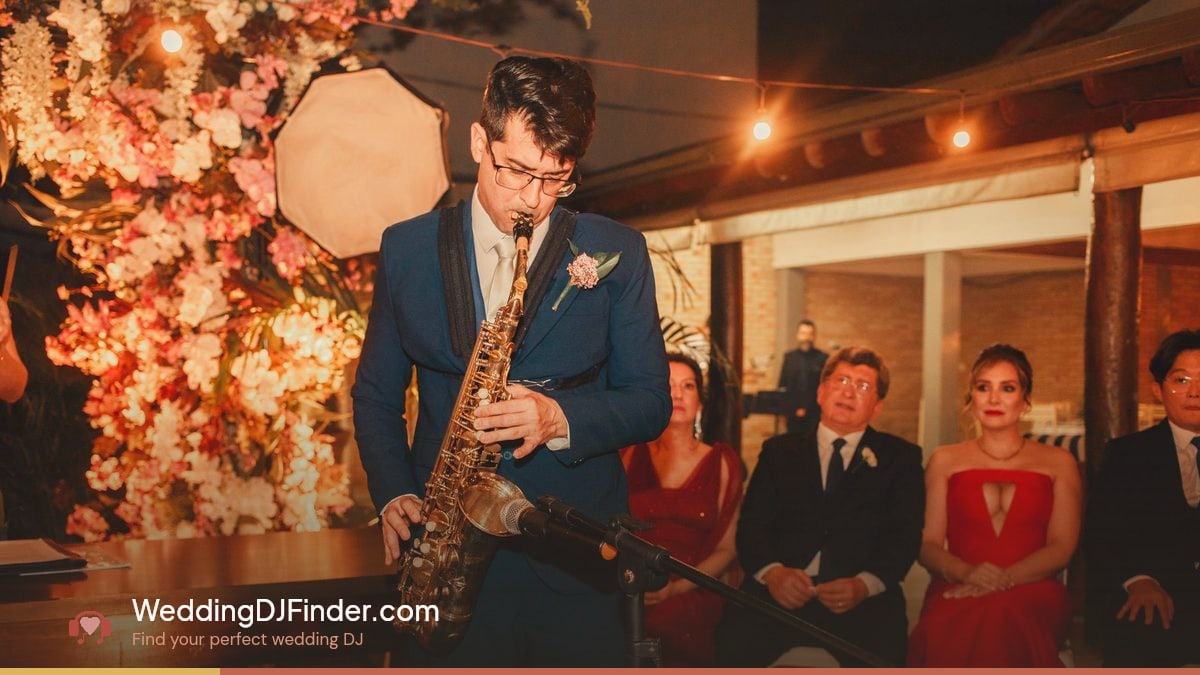
This is one of the biggest debates in wedding planning, and honestly, there's no universal right answer. A DJ and a live band create fundamentally different experiences. Neither is inherently better, they serve different vibes, budgets, and priorities.
But you need to pick one (or figure out a hybrid approach), and most of the advice out there is either biased or surface-level. So let's do a real, honest comparison.
The Core Difference
A DJ plays recorded music and serves as your MC. They curate from a virtually unlimited library of songs, read the crowd, and manage the flow of your reception.
A live band performs music in real time. They bring energy, stage presence, and a completely different kind of atmosphere. But they're limited to the songs they've rehearsed, and they need breaks.
That fundamental distinction drives every other difference we'll cover.
Cost Comparison
Let's start with the number everyone wants to know.
Wedding DJ Costs
- Average range: $1,000 to $2,500
- Budget options: $500 to $900
- Premium DJs: $2,500 to $4,500
A DJ is typically one person (sometimes with an assistant for lighting). Lower overhead means lower prices. You're paying for their expertise, equipment, and music library, not a team of musicians.
Live Band Costs
- Average range: $3,000 to $8,000
- Small ensembles (3-4 pieces): $2,000 to $4,000
- Full bands (6-10+ pieces): $5,000 to $15,000+
- Premium/well-known bands: $10,000 to $25,000+
A band involves multiple musicians, each of whom needs to be paid. Add in rehearsal time, travel for the full group, sound equipment, and a sound engineer, and costs add up fast. A six-piece band is roughly three to five times the cost of a comparable-quality DJ.
The verdict on cost: DJs win this category decisively. If budget is a primary concern, a DJ stretches your entertainment dollar much further.
Music Variety and Versatility
What a DJ Offers
A professional wedding DJ has access to essentially every song ever recorded. Want to go from Frank Sinatra to Bad Bunny to Garth Brooks to Beyonce in the span of 20 minutes? No problem. The exact original recordings, in the exact versions your guests know and love.
This matters more than people realize. When "September" by Earth, Wind & Fire comes on, people want to hear that version, the horn hits, the specific production, the way the chorus builds. A DJ delivers exactly that.
DJs also handle genre transitions more smoothly. Your cocktail hour jazz playlist can flow into dinner acoustics, then build into high-energy dance music without any awkward pauses.
What a Live Band Offers
A band is limited to songs they've rehearsed, typically 40 to 80 songs in their repertoire. That's a lot, but it's not unlimited. And their versions of songs are interpretations, sometimes better than the original, sometimes not what your guests were expecting.
Where bands shine is energy and spontaneity. A great band can extend a song when the dance floor is going wild, improvise transitions, and create moments that feel electric in a way that a recorded track can't quite replicate. There's something visceral about live instruments and vocals filling a room.
However, most bands have a genre sweet spot. A band that crushes Motown and classic rock might struggle with current Top 40 or Latin music. Make sure their strengths align with your taste.
The verdict on variety: DJs win on breadth. Bands win on live energy within their genre wheelhouse. If your reception needs to span many genres and eras, a DJ is the safer bet. If you want one incredible genre-specific experience, a great band can be transcendent.
Space and Logistics
DJ Space Requirements
A DJ setup typically needs:
- A 6-to-8 foot table for equipment
- Access to two to three power outlets
- Space for two to four speakers (placed strategically around the room)
- Optional: space for lighting rigs or a photo booth
Total footprint: roughly 30 to 50 square feet. A DJ can set up in a corner, against a wall, or even in an adjacent room if the venue layout demands it.
Band Space Requirements
A live band needs a proper performance area:
- Stage or platform space: 100 to 300+ square feet depending on band size
- Room for amplifiers, drum kit, keyboard, and monitor speakers
- Dedicated power supply (bands draw significant electricity)
- A sound engineer with a mixing board (often needs their own table)
- Space for band members' personal items and instrument cases
For smaller venues, this is a real constraint. A six-piece band on a small stage can eat up 15% to 20% of your reception floor space. If your venue is under 2,000 square feet, a full band might genuinely not fit comfortably while leaving enough room for dining and dancing.
The verdict on space: DJs are dramatically more compact and flexible. If your venue is small or has an unusual layout, a DJ adapts easily. Bands need proper staging.
The Vibe Factor
This is where the decision gets subjective, and where it arguably matters most.
The DJ Vibe
A DJ-driven reception feels like the best party you've ever been to. The music hits perfectly because it is the music, the recordings you grew up with, the songs that defined your relationship, the tracks that get every generation on the floor. When a DJ drops "Shout" by the Isley Brothers and follows it with "Levitating" by Dua Lipa and your guests lose their minds, that's the DJ advantage.
The energy comes from the music itself and the crowd's reaction to it. A skilled DJ builds momentum through song selection and mixing, creating a wave of energy that peaks at exactly the right moments.
The Band Vibe
A band-driven reception feels like a concert you get to be part of. There's a visual element, watching talented musicians perform, that creates a different kind of engagement. The band becomes a focal point, and their energy is contagious in a way that's hard to replicate with speakers.
Live music also has a warmth and presence that recorded music doesn't. Bass you can feel in your chest. Vocals that fill the room with natural resonance. The slight imperfections that make live performance feel human and exciting.
The tradeoff? Bands take breaks. Usually 15 to 20 minutes every hour. That means either silence, a basic playlist through the PA during breaks, or hiring a DJ to cover the gaps (which adds cost).
The verdict on vibe: It depends entirely on what kind of party you want. DJ receptions tend to feel more like a dance party. Band receptions tend to feel more like an event. Both can be incredible.
Practical Considerations Most People Forget
Volume Control
DJs can adjust volume with precision, instantly. This matters if your venue has noise restrictions, if older guests are struggling with volume during dinner, or if you need to bring things down for a toast and immediately back up for dancing.
Bands are inherently louder and harder to control. A drum kit alone can produce 100+ decibels. If your venue has strict noise ordinances or you're in a space where sound carries (outdoor tent, loft with hard surfaces), a band may create issues a DJ wouldn't.
Song-Specific Requests
If there's a specific song that has deep meaning to you (your parents' first dance song, the song that was playing when you got engaged), a DJ plays the exact version. A band plays their interpretation. For some songs, that distinction matters a lot.
Weather and Outdoor Setups
Bands are more vulnerable to weather. Instruments don't handle humidity, rain, or extreme temperatures well. If your reception is outdoors or in a tent, a DJ setup is more resilient and easier to protect.
Last-Minute Changes
Need to add a song at the last minute? A DJ can pull it up in seconds. Need to skip the bouquet toss and go straight to dancing? A DJ adjusts instantly. Bands need more lead time for changes and can't add unrehearsed songs on the fly.
The Hybrid Option
Some couples do both: a band for part of the night and a DJ for the rest. Common setups include:
- Band for cocktail hour and first two hours of reception, DJ takes over for late-night dancing. This gives you the live music experience for the structured part of the evening and the DJ's unlimited playlist for the dance party.
- Small acoustic ensemble for ceremony and cocktail hour, DJ for reception. A trio (guitar, bass, violin or similar) handles the intimate moments, and the DJ brings the energy for the party.
- Band performs a set, then the DJ mixes in between sets and takes over after. This keeps the music continuous and eliminates the awkward silence during band breaks.
Hybrid setups cost more (obviously), but they address the main weaknesses of each option. If budget allows, this can genuinely be the best of both worlds.
Decision Framework
Choose a DJ if:
- Your budget for entertainment is under $3,000
- You want maximum music variety across genres and decades
- Your venue is small or has space constraints
- You and your guests prioritize dancing to the original recordings
- You want a seamless, break-free evening of music
- You're having an outdoor or destination wedding with logistical complexity
Choose a live band if:
- Your budget for entertainment is $5,000+
- You want a performative, concert-like atmosphere
- Your venue has a proper stage and ample space
- You and your guests love a specific genre the band excels at
- The visual and energy of live performance matters deeply to you
- You're okay with breaks or willing to budget for a DJ to cover gaps
Choose a hybrid if:
- Your budget allows $4,000+
- You want live music for specific moments (ceremony, cocktail hour) and a DJ for the dance party
- You want the best of both but recognize each format has different strengths
How to Find the Right DJ
If you're leaning toward a DJ, or even if you're still deciding, start exploring your options early. Search for wedding DJs near your venue on WeddingDJFinder to browse profiles, read reviews, and filter by genre specialty. With over 11,000 DJs listed across the country, you'll find professionals who match your style and budget.
Bottom Line
There's no wrong choice here, only the wrong choice for you. A mediocre band isn't better than an excellent DJ, and a mediocre DJ isn't better than an excellent band. The quality of the specific vendor you hire matters far more than the format.
Figure out what kind of energy you want, what your budget supports, and what your venue can accommodate. Then find the best possible option within those constraints. Your guests won't remember whether it was a DJ or a band, they'll remember whether they had a great time.
Wedding DJ planning notes
Get practical tips for music, timelines, and questions to ask before you book. If your address is new to us, we will send a confirmation email first.
Read the 2026 Wedding DJ Industry Report for current pricing benchmarks, demand trends, and booking insights.