Wedding Reception Timeline: A DJ's Guide to Perfect Flow
After hundreds of weddings, I can tell you with absolute certainty: the couples who have the most memorable receptions aren't necessarily the ones with the biggest budgets or the most elaborate decorations. They're the ones with a tight, well-planned timeline. As a wedding DJ, I've watched perfectly beautiful receptions fall apart because nobody thought carefully about when things would happen, and I've watched modest, budget-conscious celebrations feel absolutely electric because every moment flowed into the next with intention.
Let me pull back the curtain and share what I've learned about crafting a reception timeline that keeps the energy high, honors every vendor's time, and gives your guests a night they'll talk about for years.
Why Your Reception Timeline Is the Backbone of Your Entire Event
Think of the reception timeline as the skeleton of your wedding night. Without it, everything goes limp. With it, there's structure, momentum, and purpose behind every moment.
Here's what a strong timeline actually does for you:
- It keeps energy high. Energy at a reception is like a fire. It needs to be fed at the right moments. Dead air, awkward pauses, and unexpected lulls are the buckets of water that kill it. A good timeline anticipates where the dips might happen and front-loads them with action.
- It respects your vendors. Your photographer has a shot list. Your caterer has food timing. Your videographer needs cues. When the timeline is clear and everyone has a copy, each vendor can do their best work without stepping on anyone else's toes.
- It prevents dead air. Nothing is more cringe-inducing than a room full of dressed-up guests staring at each other while the DJ scrambles to figure out what comes next. Dead air kills the vibe faster than anything.
- It gives your guests a journey. The best receptions take guests through a deliberately crafted emotional arc, from the excitement of arrival, through the warmth of dinner and toasts, to the exhilaration of the dance floor. That arc doesn't happen by accident.
"I always tell couples: your timeline is a love letter to your guests. It says, 'We thought about your experience, and we want every moment to feel intentional.'"
Sample 4-Hour Reception Timeline
Four hours is the most common reception length, and it's plenty of time when structured correctly. Here's a real-world timeline I use as a starting framework for clients:
- 5:00 PM - Cocktail Hour Begins: Guests arrive to upbeat, conversational background music. This is where a jazz playlist or acoustic covers work beautifully. The DJ keeps things low-key while guests mingle and grab drinks.
- 5:55 PM - Guests Called to Ballroom: I announce over the PA that dinner seating is open. This gives five minutes of buffer before the main event.
- 6:00 PM - Grand Entrance: Wedding party introductions, followed immediately by the couple's entrance. Energy peaks here. I cue the room with a high-energy entrance song and get guests on their feet.
- 6:05 PM - First Dance: Straight into the first dance while the energy from the entrance is still crackling. Don't wait, capitalize on that momentum.
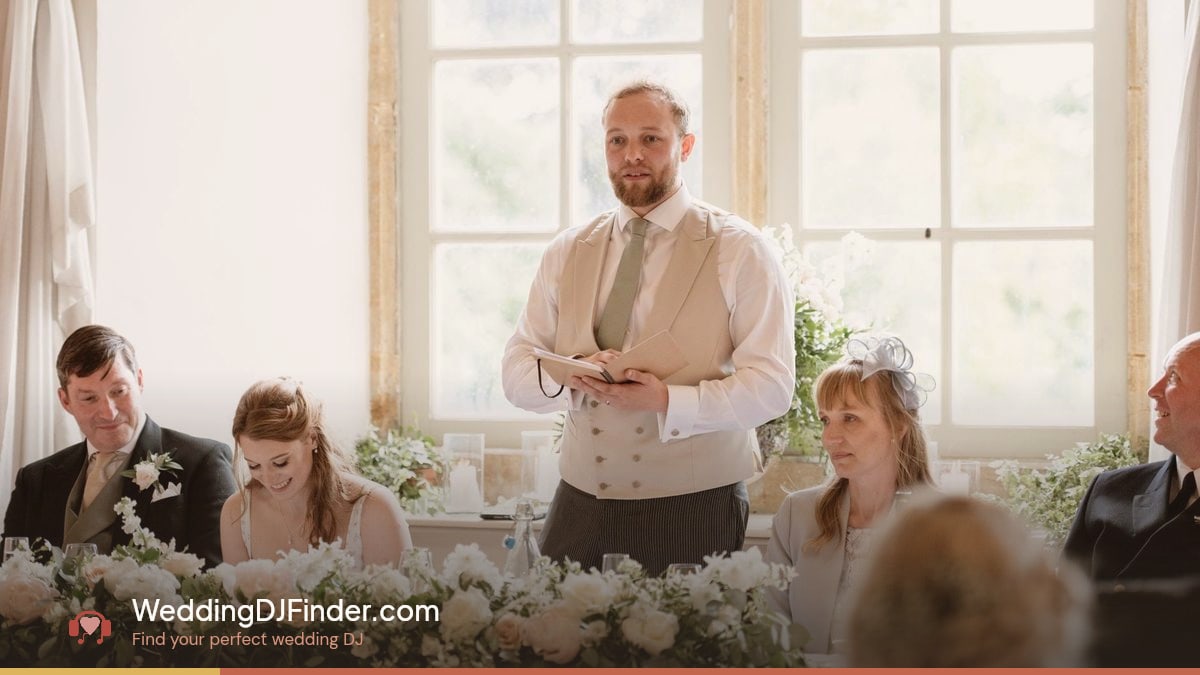
- 6:10 PM - Welcome Toast: Best man, maid of honor, or parent gives a brief welcome. Dinner service begins immediately after.
- 6:15 PM - Dinner Service Begins: Soft dinner music plays. I typically run a curated playlist of the couple's favorites: think laid-back versions of songs they love.
- 6:45 PM - Additional Toasts (if any): I space these out during dinner rather than stacking them all at once. One at a time, never back-to-back.
- 7:15 PM - Parent Dances: Father-daughter and mother-son dances. By now, dinner is mostly done and guests are relaxed and emotional.
- 7:25 PM - Cake Cutting: Gets it done before dancing starts so the caterer can serve dessert during early dancing.
- 7:30 PM - Open Dance Floor: Starts with three to four irresistible crowd-pleasers. The floor should be packed within ten minutes.
- 8:30 PM - Bouquet Toss: Scheduled mid-dance to give dancers a brief pause without losing momentum.
- 8:55 PM - Last Dance Announced: I give a heads-up so guests can find their person for the final slow song.
- 9:00 PM - Reception Ends.
Sample 5-Hour Reception Timeline
With an extra hour, you have breathing room. This is where you can add a cigar bar moment, a sparkler exit rehearsal announcement, or simply let the dance floor breathe longer. Here's how I structure a five-hour reception:
- 5:00 PM - Cocktail Hour
- 6:00 PM - Grand Entrance and First Dance
- 6:10 PM - Welcome Toast and Dinner Begins
- 6:30 PM - First Additional Toast
- 7:00 PM - Second Additional Toast (if needed)
- 7:20 PM - Parent Dances
- 7:35 PM - Cake Cutting
- 7:45 PM - Open Dance Floor Begins
- 8:30 PM - Bouquet and Garter Toss
- 9:15 PM - Anniversary Dance or Special Dedication Songs
- 9:45 PM - Last Dance Announced
- 10:00 PM - Reception Ends / Sparkler Exit
That extra hour makes a massive difference on the dance floor. In a four-hour reception, open dancing lasts roughly 90 minutes. In a five-hour reception, you're looking at nearly two and a half hours, which is where the real magic happens. If you're planning a reception in a city like New York or Los Angeles where guests tend to party later, I strongly recommend the five-hour format.

Photo: Dimitri Kuliuk via Pexels
Navigating the Key Transitions
The transitions between segments are where most receptions lose their footing. Here's how I handle each one like a professional:
Cocktails to Dinner
This transition should feel like a gentle tide pulling guests into the room, not a fire alarm. I start by bringing the cocktail hour music down slightly about ten minutes before the entrance, which subconsciously signals that something is about to change. Then I make a warm, welcoming announcement inviting guests to find their seats, followed immediately by the entrance music. Never let this gap exceed three minutes.
Dinner to Speeches
I coordinate with the caterer so that toasts happen between courses, never while food is being actively served. Guests can't give a speaker their full attention when a plate is being placed in front of them. I also keep my mic levels slightly elevated during toasts to ensure every guest can hear, regardless of where they're seated.
Speeches to First Dances
This is one of my favorite transitions to engineer. As the last toast wraps up, I have the couple's first dance song already cued and ready. I wait for the applause to peak, then I bridge directly into the opening bars of the song. That applause-to-music transition is electric when it's timed right.
First Dances to Open Dance Floor
This is where DJs either win the night or lose it. After the parent dances, I don't play a slow song or a mid-tempo ballad. I go straight for a song that everyone in the room will recognize and feel compelled to dance to. Think something like a universally loved pop anthem or an irresistible Motown classic. For genre-specific recommendations, check out our guides to Motown wedding music and Top 40 reception hits.

Photo: Jay jay Redelinghuys via Pexels
Scheduling the Special Moments
Cake Cutting
The cake cutting works best right before open dancing begins. This serves two purposes: it gives the photographer a beautiful, well-lit moment with full guest attention, and it allows the catering team to begin serving dessert during the early part of dancing, which keeps guests fueled and happy without interrupting the dance floor momentum.
Bouquet Toss
I always schedule the bouquet toss about halfway through open dancing, typically 45 to 60 minutes in. By then, the floor is warm, guests are loose, and it works as a natural, energetic pause. Never do the bouquet toss before dancing starts. You'll kill the momentum you just worked so hard to build.
Last Dance
The last dance is an art form. I announce it about ten minutes before closing so guests can find their partners. I always choose something emotionally resonant, either something the couple specifically requested or a universally romantic slow song. As the song plays out, I gradually lower the lights if possible. It should feel like the perfect ending to a film, not a store announcement that the mall is closing.
How the DJ Coordinates With Your Vendor Team
This is where experienced DJs earn their fee in ways couples rarely see. Behind the scenes, a good DJ functions almost like a co-director of the entire reception.
- With the photographer: I always confirm the shot list and make sure I'm not transitioning out of key moments before they've got their shots. If the cake cutting is running long because the photographer wants another angle, I hold the music and keep guests engaged with light banter.
- With the videographer: I coordinate audio feeds when needed, and I communicate which songs are coming up so they can position their cameras accordingly for important moments.
- With the wedding coordinator: This is my most important relationship of the night. We typically do a walkthrough call a week before the wedding and then check in at the start of the reception. I defer to the coordinator on caterer timing and follow their lead on when to move between segments.
- With the caterer: I confirm dinner service timing before the event so I know exactly when to pull back music for toasts and when to ramp back up after courses are cleared.
"A great DJ isn't just a music player. They're an event coordinator with a playlist. Every decision I make affects the whole team, so constant communication is non-negotiable."
For more on how to build a strong vendor team, read our related guide on how to choose a wedding DJ and what questions to ask during the consultation.
The Most Common Timeline Mistakes I've Seen
After years in this industry, I've seen the same mistakes derail receptions over and over. Here's what to avoid:
- Too many speeches. This is the single biggest timeline killer. Limit formal toasts to two or three maximum. Every additional speaker adds five to eight minutes and drains the room's energy. If Aunt Linda wants to say something, suggest she does it at the rehearsal dinner.
- Dancing starts too late. If open dancing doesn't begin until 8:00 PM in a 9:00 PM reception, you've just handed your DJ forty minutes to work with. That's not a dance party. That's a playlist. Aim to have the floor open by the 90-minute mark at the latest.
- Stacking all the events at once. Cake cutting, bouquet toss, garter toss, and anniversary dance all in a 20-minute window is exhausting and confusing. Space these moments out throughout the evening.
- Skipping the buffer time. Every segment needs 3-5 minutes of buffer built in. Things run late. That's not pessimism. That's physics.
- Forgetting that cocktail hour is part of the reception. Some couples put so much thought into the main reception that the cocktail hour becomes an afterthought. Your DJ should be curating that room from the moment the first guest walks in.
Tips for Maintaining Energy Throughout the Night
Energy management is probably the most underrated skill in wedding DJ work. Here's how I keep a room moving from the first song to the last:
- Read the room constantly. The floor tells you everything. If people start drifting off, it's not time to wait it out. It's time to pivot. I keep a mental list of five "emergency floor fillers" ready at every wedding.
- Use tempo strategically. I build energy in waves: three or four high-energy songs, then a slight dip to a mid-tempo groove, then back up. This prevents burnout and keeps dancers from exhausting themselves in the first thirty minutes.
- Don't overstuff the request jar. Honoring every request leads to an incoherent playlist. I mix in requests strategically, always evaluating whether the request fits the current energy of the room.
- Time the slow songs carefully. One or two slow songs during the dance floor portion is perfect. More than that and you'll empty the floor. Save them for meaningful moments.
- Keep announcements brief and warm. Every time I touch the microphone, I'm either building excitement or killing it. I practice every announcement and keep them short, specific, and energetic.
Handling Timeline Delays Like a Pro
Every wedding runs late somewhere. The caterer gets backed up. A speech runs long. The couple disappears for photos. Here's how I manage delays without letting the room feel it:
- Always have filler content ready. If dinner is late, I can run a crowd game, take song requests from guests at their tables, or play an extended cocktail-hour set. The room never needs to know we're waiting.
- Communicate immediately with the coordinator. The moment I sense we're running behind, I text or walk over to the coordinator. We recalibrate together. Maybe the cake cutting gets moved, or one toast gets cut. Decisions get made fast.
- Never announce delays. I never say "we're running a little behind" on the microphone. It deflates the room immediately. Instead, I create a seamless experience while the team sorts things out backstage.
- Shorten the adjustable segments. If we're fifteen minutes behind, the most common solution is trimming dinner music, shortening the bouquet toss setup time, or adjusting the mid-dance break. The dance floor time is sacred. I protect it at all costs.
"Delays are inevitable. Your DJ's job is to make sure your guests never feel them. The best compliment I ever received was a bride who said, 'Everything ran so smoothly.' It hadn't, but she never knew."
Putting It All Together
A wedding reception is one of the most complex live events most people will ever host: dozens of vendors, hundreds of guests, and a couple who deserves to be fully present and joyful every single moment. The timeline is what makes all of that possible. It's not a rigid script; it's a flexible framework that gives everyone the structure they need to improvise beautifully when the moment calls for it.
Start building your timeline at least three months before your wedding, share it with every vendor by the two-week mark, and review it one final time the day before. Then trust your DJ to hold it all together while you dance.
If you're still searching for the right DJ to execute your perfect reception, find a wedding DJ near you on WeddingDJFinder.com. Browse profiles, listen to mixes, read real reviews, and connect with experienced professionals who understand that the timeline isn't just a schedule. It's the heartbeat of your entire wedding night.
Wedding DJ planning notes
Get practical tips for music, timelines, and questions to ask before you book. If your address is new to us, we will send a confirmation email first.
Read the 2026 Wedding DJ Industry Report for current pricing benchmarks, demand trends, and booking insights.