How to Create the Perfect Wedding Song List for Your DJ
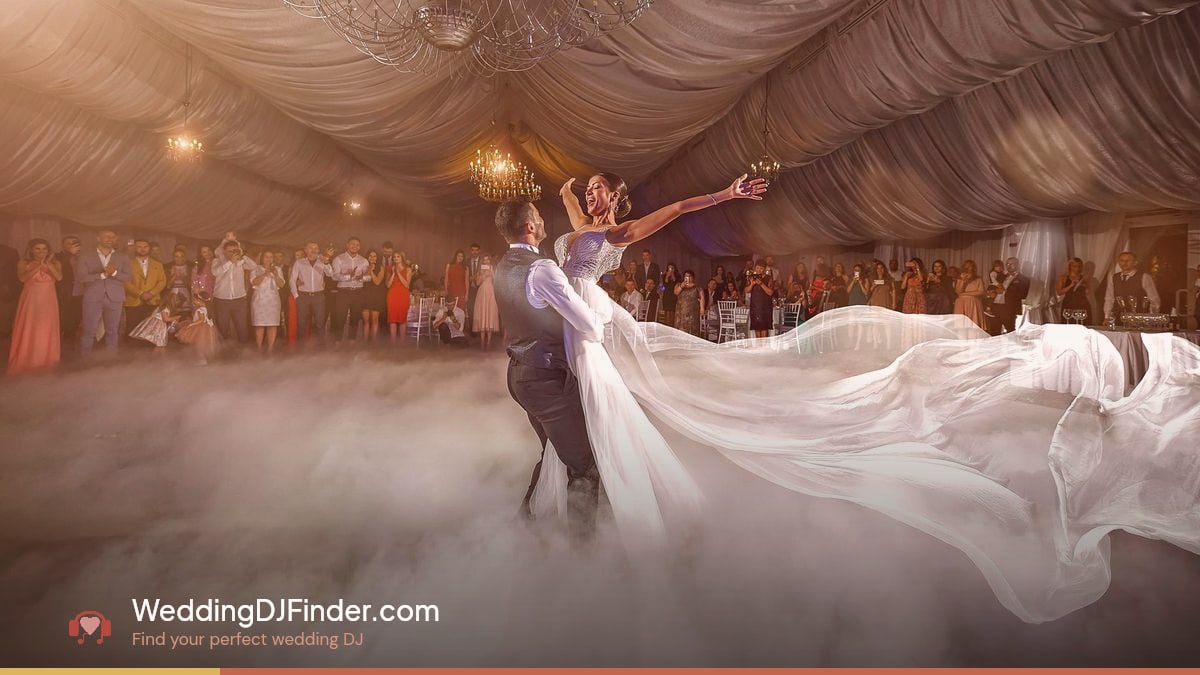
Your wedding playlist is the invisible thread that ties every moment of your day together. Get it right, and guests will be dancing until the venue kicks everyone out. Get it wrong, and you'll spend your reception watching your aunt awkwardly sway to a song nobody recognizes while the dance floor empties. No pressure.
The good news: building a great wedding song list isn't about having perfect taste in music. It's about strategic planning: knowing how many songs you actually need, understanding the emotional arc of a reception, and trusting your DJ to fill in the gaps intelligently. This guide walks you through every musical moment of your wedding day, from the first note of your processional to the final slow dance that sends everyone home smiling.
Understanding the Musical Moments of Your Wedding Day
Before you start building a playlist, it helps to see the full picture. Your wedding day has distinct musical chapters, each with its own mood, tempo, and purpose. Think of it less like a playlist and more like a film score: every scene needs the right soundtrack.
Ceremony Music
The ceremony is the most emotionally charged part of your day, and the music should reflect that. You'll need songs for three specific moments:
- Prelude (30-45 minutes before the ceremony begins): Soft background music as guests are seated. Plan for 6-10 songs at roughly 3-4 minutes each. Think acoustic covers, instrumental pieces, or classical arrangements. "Can't Help Falling in Love" (instrumental cover) or Debussy's "Clair de Lune" work beautifully here.
- Processional (3-5 minutes): This is the walk down the aisle, one song for the wedding party, often a second (or the same) for the couple. Popular picks right now include "A Thousand Years" by Christina Perri, Pachelbel's Canon in D, or the stunning orchestral version of "Turning Page" by Sleeping at Last.
- Recessional (2-3 minutes): The triumphant exit as newlyweds. This is where you can have fun. Classics like "Signed, Sealed, Delivered" by Stevie Wonder or "Can't Stop the Feeling" by Justin Timberlake bring instant joy. For something more timeless, Handel's "Hallelujah Chorus" or "Ode to Joy" never fail.
Cocktail Hour
Cocktail hour is the transition zone: guests are mingling, grabbing drinks, and the couple is usually doing photos. You need approximately 60-75 minutes of music, which means 18-22 songs. This segment sets the sophistication tone for the whole reception. Jazz standards (think Frank Sinatra, Norah Jones, Michael Bublé), bossa nova, or acoustic pop works perfectly. Avoid heavy bass or lyrics that demand attention. This is background music that adds atmosphere without competing with conversation.
Some standouts for 2026 cocktail hour vibes: "The Look of Love" by Dusty Springfield, "Come Away With Me" by Norah Jones, "Fly Me to the Moon" (Sinatra's live version), or newer acoustic covers like Noah Kahan's "Stick Season" stripped down.
Dinner Music
Dinner typically runs 60-90 minutes, requiring another 20-25 songs. Similar energy to cocktail hour but can gradually warm up as dinner winds down. This is where you might slip in some soft Motown, easy listening pop, or even folk. Artists like James Taylor, Etta James, Jack Johnson, and Carole King are perennial favorites. For a more modern lean, try "Golden Hour" by JVKE or "Die With A Smile" by Lady Gaga & Bruno Mars.
The Reception Dance Floor: Segment by Segment

First Dance
The first dance is typically one song, 3-4 minutes. Couples sometimes choose to fade it out at the 2-minute mark if they don't want to slow dance in front of everyone for the full length. Trending first dance songs for 2026 include:
- "Perfect" by Ed Sheeran (still a classic, still requested constantly)
- "Lover" by Taylor Swift
- "I Choose You" by Sara Bareilles
- "From the Start" by Laufey (gaining massive traction for weddings)
- "Timeless" by Kayne West ft. Ty Dolla $ign (for couples who want something unexpected)
- "Can I Be Him" by James Arthur (underused, deeply romantic)
Parent Dances
You'll typically have one song for the father-daughter dance and one for the mother-son dance, though many couples now do a combined parent dance to keep things moving. Each song should be 2.5-3.5 minutes. Ask your DJ to fade at around 2 minutes if the full length feels too long on the dance floor.
For father-daughter: "My Girl" by The Temptations, "Butterfly Kisses" by Bob Carlisle, "Daughters" by John Mayer, or the newer "girl" by Maisie Peters. For mother-son: "A Song for Mama" by Boyz II Men, "Unforgettable" by Nat King Cole, or "You Are The Best Thing" by Ray LaMontagne.
Bouquet and Garter Toss
These are short, fun moments, one song each, often under 2 minutes (or the DJ uses just the most relevant 60-second portion). The bouquet toss almost always uses "Single Ladies" by Beyoncé, though "Girls Just Wanna Have Fun" by Cyndi Lauper is an excellent alternative. The garter toss often features "Another One Bites the Dust" by Queen or "Pony" by Ginuwine for the more adventurous crowd.
Party Dancing
This is the meat of your reception, typically 90-120 minutes of open dancing, requiring 30-40 songs. This is where your DJ's expertise matters most. Rather than trying to program every song, give your DJ a strong foundation with a genre direction and let them read the room. More on this shortly.
Last Dance
The final song sends everyone home. It should be a moment, something slow and meaningful, or a big celebratory anthem depending on your vibe. "Last Dance" by Donna Summer is a literal choice. "Don't Want to Miss a Thing" by Aerosmith, "Sweet Caroline" by Neil Diamond (for a big group singalong finale), or "Here Comes the Sun" by The Beatles are all beautiful options. More modern: "Daylight" by Taylor Swift or "Love Story (Taylor's Version)" for an emotional close.
Building Your Three-Tiered List: Must-Play, Play-If-Possible, and Do-Not-Play
The most efficient way to communicate with your DJ is through a three-tier system. It eliminates confusion, sets clear expectations, and gives your DJ creative room within your boundaries.
Must-Play (10-15 songs maximum)
These are the songs that mean something specific to you: the song playing when you first said "I love you," your first concert together, the song your late grandmother danced to at her own wedding. Limit this list ruthlessly. Every song on this list is a song your DJ can't replace with something that might actually work better for the dance floor in that moment. Think of must-plays as anchors, not a setlist.
Play-If-Possible (15-25 songs)
These are songs you'd love to hear but won't be devastated if they don't make it in. This is where you can be generous: include different genres, throwbacks, guilty pleasures. Your DJ will use this list to understand your taste and fill gaps intelligently. "Blinding Lights" by The Weeknd, "Shake It Off" by Taylor Swift, "September" by Earth Wind & Fire, "Dancing Queen" by ABBA, solid play-if-possible material.
Do-Not-Play (no limit necessary)
This list is equally important. Maybe you hate "YMCA" with a burning passion. Maybe "I Will Always Love You" is too emotionally loaded because of a family situation. Maybe you just cannot hear "Wonderwall" one more time in your life. Put it on the do-not-play list without explanation. A good DJ will respect it completely, no questions asked.
Pro tip from experienced wedding DJs: "The do-not-play list is just as valuable as the must-play list. Knowing what a couple hates tells me as much about their taste as knowing what they love, and it protects everyone from an awkward moment mid-reception."
Genre Mixing Strategies for Diverse Crowds
The hardest part of wedding music is satisfying three generations at once: grandparents who want big band and Sinatra, parents who want classic rock and Motown, and your college friends who want hip-hop, EDM, or indie pop. The secret is strategic layering, not compromise.
A common DJ technique is the "energy ramp": start the dancing portion with crowd-pleasing classics that older guests recognize, build energy through the '80s and '90s, then transition to current hits as the night goes on and older guests naturally begin to step away. This isn't exclusionary; it's reading the natural flow of a wedding reception.
For genre references, consider building your list around these anchors: a strong Motown foundation (everyone knows it), classic rock for that '70s-'80s sweet spot, a healthy dose of contemporary pop, and a hip-hop and R&B block for later in the night. Country is increasingly popular at weddings outside of the traditional country belt, "Boot Scootin' Boogie" or "Friends in Low Places" by Garth Brooks have surprising cross-demographic appeal.
For truly multicultural crowds, think about the emotional universality of certain songs. "I Gotta Feeling" by The Black Eyed Peas, "Uptown Funk" by Bruno Mars, and "Happy" by Pharrell Williams work across almost every cultural divide because the music itself is physically hard to resist.
Cultural Considerations for Multicultural Weddings
Multicultural weddings are increasingly common, and a thoughtful playlist can honor both families' backgrounds without feeling like a forced cultural showcase. The key is integration, not segregation: weave cultural music throughout the evening rather than creating a "Latin block" or "Bollywood segment" that feels like a sideshow.
- South Asian weddings: Bhangra beats during high-energy moments, classic Bollywood like "Dilbar Dilbar" or modern fusion tracks. Artists like Badshah or AP Dhillon have incredible crossover appeal.
- Latin celebrations: Bachata, salsa, and reggaeton woven into the dance floor ("Propuesta Indecente" by Romeo Santos, "Tití Me Preguntó" by Bad Bunny, or classic salsa from Marc Anthony).
- Nigerian/Afrobeats: Burna Boy's "Last Last," Wizkid's "Essence," or Davido's "Fall". These songs have massive mainstream recognition now and work beautifully even for non-Afrobeats audiences.
- Greek and Jewish weddings: Hora dancing has specific musical requirements. "Hava Nagila" is non-negotiable at many Jewish weddings, and a good DJ will know when and how to transition in and out of traditional circle dances.
- Chinese and Taiwanese weddings: Mandopop classics during dinner, or specific traditional songs for the tea ceremony portion if it's part of the reception.
If you're planning a multicultural celebration in a major city, connecting with a DJ who has specific experience in your cultural traditions makes an enormous difference. Los Angeles, New York City, and Houston have particularly strong pools of DJs with multicultural wedding expertise. Find a wedding DJ near you who specializes in exactly what you need.
Handling Family Music Requests Diplomatically
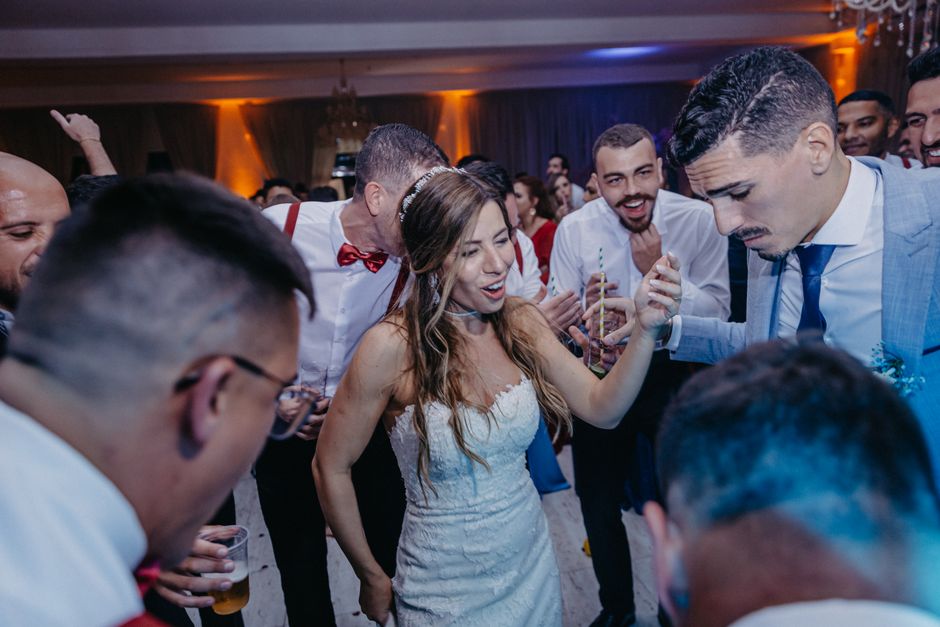
Your future mother-in-law wants "My Heart Will Go On." Your dad has been requesting "Don't Stop Believin'" for three months. Your college roommate keeps texting you song ideas. Here's how to handle it all without losing your mind or damaging relationships.
The "We'll Add It to the List" Technique
When someone makes a request, say warmly: "That's a great song, I'll add it to the list we're giving our DJ." Then add it to your play-if-possible list. This is completely honest. You ARE adding it to the list. Whether it gets played is up to the DJ reading the room. You haven't promised anything, but you've honored the request.
When to Actually Honor a Request
If a song request comes from someone who is contributing significantly to your day (a parent, a close family member who's paying for the wedding), it may be worth elevating one or two songs to the must-play list as a gesture of love. Just do it thoughtfully and communicate the final list clearly.
The Guest Request Card
Some couples include a song request card with their RSVP or on the wedding website. This is a lovely gesture, but treat all guest requests as suggestions, not obligations, and communicate that to your DJ upfront. A request wall is a great way to make guests feel heard while keeping control of the actual playlist with people who know what they're doing.
"I always tell couples: it's your wedding, not a jukebox. Guest requests are a gift, not a demand. A good DJ will work in what fits and gracefully ignore what doesn't, and nobody ever notices the songs that weren't played."
How to Collaborate with Your DJ on the Final Playlist
Your DJ is not just a human Spotify player. They're an experience architect. The best collaboration happens when you give them clear direction with flexible execution. Here's how to make that partnership work:
The Pre-Wedding Consultation
Most professional wedding DJs offer a consultation 4-6 weeks before the wedding to go through the playlist in detail. Come prepared with your three-tier list, the timing of your reception, and any special moments that need specific songs. Also come prepared to describe your crowd: average age, where people are from, whether your friends are more indie or hip-hop, whether grandparents are likely to be on the dance floor.
Trust Their Expertise, Within Reason
A DJ who has played 200 weddings knows something you don't: which songs clear dance floors and which ones fill them. If your DJ pushes back on a must-play choice, hear them out. They might suggest a better version (a remix, a different arrangement), a better placement (dinner rather than dancing), or a genuine red flag you haven't considered.
You can also check out our guide on how to choose the right wedding DJ and the 15 questions you should ask before booking for more on building this relationship early.
The Final Timeline Document
Create a simple document that maps songs to moments with approximate times. Your DJ should receive this at least two weeks before the wedding. Include:
- Song title, artist, and specific version (original vs. live vs. acoustic) for every pinned moment
- Approximate start times for each reception segment
- Any fade instructions (e.g., "fade first dance at 2:30 minutes")
- Your MC's name and any announcements needed
- The do-not-play list printed clearly at the top
Current Trending Songs for 2026 Weddings
Trends shift quickly, but here's a snapshot of what's resonating at weddings heading into 2026 across key moments:
Processional Picks
- "From the Start" by Laufey: romantic, intimate, jazz-influenced
- "All I Want" by Kodaline (strings version)
- "Enchanted (Taylor's Version)" by Taylor Swift
- "Grow As We Go" by Ben Platt
First Dance Picks
- "you & me" by Fleck, a rising slow dance favorite
- "Die With A Smile" by Lady Gaga & Bruno Mars
- "Not About Angels" by Birdy
- "Timeless" by Kayne West ft. Ty Dolla $ign
Dance Floor Anthems
- "Houdini" by Eminem, for the hip-hop crowd
- "Espresso" by Sabrina Carpenter, massive at receptions right now
- "Good Luck, Babe!" by Chappell Roan
- "Levitating" by Dua Lipa, still electric on wedding dance floors
- "BREAK MY SOUL" by Beyoncé, reliable floor-filler
Timeless Crowd-Pleasers That Never Miss
- "September" by Earth Wind & Fire
- "Dancing Queen" by ABBA
- "Mr. Brightside" by The Killers
- "Don't Stop Me Now" by Queen
- "Uptown Funk" by Bruno Mars ft. Mark Ronson
Common Mistakes to Avoid
Even well-intentioned couples make these playlist errors. Here's what to watch out for:
Too Many Slow Songs During Dancing
One slow song every four to five songs is the general rule. More than that, and your dance floor deflates. Slow songs are palette cleansers, not the main course. If you have a lot of romantic songs you love, save them for dinner rather than trying to force them into the dancing portion.
Not Enough Genre Variety
Even if you're a devoted indie rock couple, an all-indie reception will lose half your guests by 9pm. Build in at least two or three genre pivots during open dancing to keep different pockets of your crowd engaged. You can always return to your preferred genre, just don't live there exclusively.
Micromanaging Every Track
This is the most common mistake couples make: building a 90-song playlist for the dancing portion and expecting the DJ to play every song in order. This is a recipe for a mediocre reception. Your DJ needs creative flexibility to read the room: if a song isn't working, they need to pivot. Trust the process. Give them direction, anchor points, and boundaries. Let them do the rest.
Forgetting the Transitions
A great playlist isn't just great songs. It's great songs in the right order with smart transitions. Jumping from a slow ballad directly into a drum-heavy hip-hop track without a transition kills momentum. Discuss transition philosophy with your DJ early: do you want seamless mixing, or do you prefer defined song starts? Both are valid, but the choice should be intentional.
Ignoring the Room's Acoustics
A song that sounds incredible in headphones might not translate to a ballroom with high ceilings and a full crowd. Bass-heavy tracks especially need EQ adjustment. This is another reason to trust your DJ. They'll know how to mix for your specific venue. If you have a venue walk-through, try to have your DJ present. Check out tips on planning music for different venue types for more guidance.
How Many Songs Do You Actually Need? A Quick Reference
- Ceremony prelude: 8-12 songs (30-45 min)
- Processional: 1-2 songs
- Recessional: 1 song
- Cocktail hour: 18-22 songs (60-75 min)
- Dinner: 20-25 songs (60-90 min)
- First dance: 1 song
- Parent dances: 1-2 songs
- Bouquet/garter: 1-2 songs
- Open dancing: 30-40 songs (90-120 min), but let your DJ supplement this heavily
- Last dance: 1 song
Total pinned songs you actually need to choose: roughly 50-60. The rest is your DJ's expertise filling in the gaps based on the direction you've given them.
Conclusion: The Playlist Is a Framework, Not a Script
The best wedding playlists are built on intention, not obsession. Know your must-play anchors, trust your DJ with the space between them, and communicate clearly about what you never want to hear. Give your crowd a journey (from the tender ceremony walk to the triumphant recessional, through elegant cocktail hours and warm dinners, into the full-tilt joy of an open dance floor), and they'll remember your wedding long after the last song fades.
The music you choose says something real about who you are as a couple. Make those choices deliberately, collaborate generously with the professional you've hired, and then let go. The dance floor doesn't lie: when the right song hits at the right moment, with the right crowd around you, there's nothing quite like it.
Ready to find the DJ who can bring your vision to life? Find a wedding DJ near you on WeddingDJFinder.com: browse profiles, listen to mixes, read reviews, and connect with experienced professionals who specialize in exactly the kind of wedding you're planning. Your perfect playlist starts with the right person behind the decks.
Wedding DJ planning notes
Get practical tips for music, timelines, and questions to ask before you book. If your address is new to us, we will send a confirmation email first.
Read the 2026 Wedding DJ Industry Report for current pricing benchmarks, demand trends, and booking insights.