What Does a Wedding DJ Actually Do? (It's Way More Than Music)
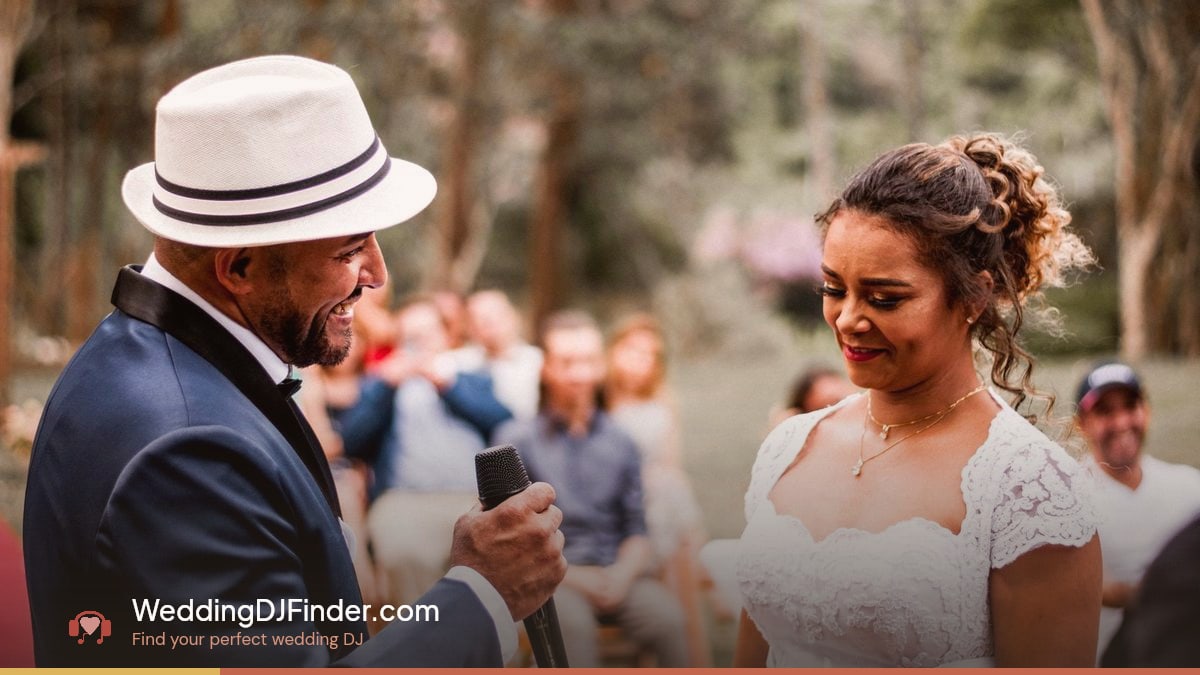
Here's a question worth asking before you sign any contracts: what exactly are you paying a wedding DJ to do? If your honest answer is "show up with some speakers and hit play on a playlist," you're not alone, and you're also significantly underselling one of the most important roles at your entire reception.
The misconception is almost universal. Couples who have never hired a DJ before tend to imagine someone standing behind a laptop, occasionally nodding their head to the beat, while a computer does all the real work. It's an understandable assumption in an era where Spotify can generate a wedding playlist in thirty seconds. But here's the thing: a wedding DJ isn't just a music delivery mechanism. They're a planner, a technician, a crowd psychologist, an emcee, and a problem-solver, all wrapped into one person who also happens to know how to beatmatch.
This article is for couples who are genuinely trying to understand what they're investing in. Because once you see the full picture, the price tag makes a lot more sense.
The Work Starts Long Before Your Wedding Day
Most couples are surprised to discover that a professional wedding DJ begins working on their event weeks or even months before the reception. This pre-wedding preparation is where a significant portion of your investment actually goes, and it's largely invisible unless you know to look for it.
Initial Consultations
A good DJ will sit down with you (in person, over video, or by phone) for an in-depth consultation that goes well beyond "what songs do you like?" They're trying to understand your personalities, your guest demographic, the vibe you want for each part of the evening, and the moments that matter most to you. Are you a couple who wants to dance all night to 90s hip-hop? Do you have elderly grandparents who need the volume kept reasonable during dinner? Is there a group of college friends who will absolutely lose their minds if they hear one specific song? These details shape every decision a DJ makes on your wedding night.
Song Curation and Custom Playlists
After the consultation, a professional DJ doesn't just pull up a generic "wedding playlist." They curate music specific to your event (researching songs you've requested, checking for clean edits where needed, sourcing specific versions and intros you might prefer, and building out sets for each phase of the night: cocktail hour, dinner, and dancing). This might involve hours of listening, editing, and organizing tracks to ensure every transition feels intentional rather than accidental.
Timeline Planning
Your DJ is also a key stakeholder in your reception timeline. They'll work through the order of events with you (when the wedding party enters, when toasts happen, when the first dance occurs, when dinner service flows into open dancing), and help identify any timing conflicts before they become problems on the day. A well-structured reception timeline is one of the most underrated tools for a smooth wedding, and your DJ has usually helped build dozens of them.
Vendor Coordination
A professional DJ will also reach out to your other vendors (your venue coordinator, your photographer, your caterer) to sync timelines and make sure everyone is working from the same playbook. If your photographer needs five extra minutes for portraits before the cake cutting, your DJ needs to know that. If your caterer plans to clear plates at a specific time, that affects when dancing kicks off. Your DJ is often the connective tissue holding your vendor team together, even if you never see that coordination happening.

Credit: Aleksandr Neplokhov via Pexels
The Day-Of Setup (It Takes Hours)
On your wedding day, while you're getting ready and taking photos, your DJ is already at the venue doing the kind of work that nobody sees but everybody benefits from.
Most professional wedding DJs arrive two to three hours before the event begins. Setup isn't just plugging in a laptop. It involves hauling in speakers, subwoofers, amplifiers, mixers, lighting rigs, and backup equipment, then positioning everything strategically in a space they may never have worked in before. Speaker placement matters enormously for sound quality. A speaker pointed the wrong way can create dead spots where guests can't hear announcements, or feedback loops that make speeches painful to listen to.
Sound Checks and Venue Walkthroughs
Once equipment is set up, your DJ will run through comprehensive sound checks: testing every microphone, every input, every output. They'll walk the room while music plays to identify any acoustic problems. Hard floors, high ceilings, unusual room shapes, outdoor spaces with ambient noise, all of these affect how sound behaves, and a good DJ adjusts their setup accordingly. They're also doing a venue walkthrough to understand the flow: where guests will be seated, where the dance floor is, where speeches will happen, where the entrance points are for grand introductions.
If you're having ceremony music through the same DJ, they'll also run a separate sound check for that setup, particularly if it's in a different location, like a garden or chapel, that requires wireless speakers or additional equipment runs.
During the Event: Reading the Room
Here's where the real art lives. The difference between a DJ who plays music and a DJ who runs a reception is entirely about what happens in real time, in the room, with real human beings who all have different tastes, energy levels, and thresholds for "Mr. Brightside."
Managing Energy Flow
Your reception has a natural energy arc. Cocktail hour tends to be conversational and relaxed. Dinner gradually builds anticipation. Dancing starts with something universally accessible and builds toward high-energy peak moments. A skilled DJ understands this arc and actively manages it: reading the crowd's body language, watching who's gravitating toward the dance floor, noticing when energy is dipping, and making real-time adjustments to pull people back in.
This is called reading the room, and it cannot be automated. No algorithm knows that your aunt just got to the bar and is about to drag fifteen people onto the dance floor if the DJ plays the right song in the next three minutes. A great DJ does.
Live Mixing and Transitions
Professional DJs aren't just pressing play on pre-made playlists. They're mixing tracks live: blending songs together, adjusting tempos, cueing up transitions that feel seamless rather than jarring. When a song ends abruptly and silence fills a dance floor, energy drops. Skilled mixing keeps momentum alive. It's the difference between a party that breathes and one that stutters.
"The best DJs I've ever seen don't play their favorite music. They play what the room needs to hear, at exactly the moment it needs to hear it, and those are two very different skills."
MC Duties: The Voice of Your Evening
Your DJ is almost certainly also your master of ceremonies, and this role deserves far more credit than it typically receives. The MC function is what keeps your entire evening moving coherently from one moment to the next.
This includes:
- Grand entrance announcements: introducing your wedding party and the two of you with energy and accuracy (getting names right is non-negotiable)
- Directing guests: letting people know when dinner is served, when to find their seats, when to gather for the bouquet toss
- Cueing special moments: building anticipation before the first dance, the father-daughter dance, the cake cutting
- Managing toasts: introducing speakers, handing off microphones, filling any awkward gaps gracefully
- Keeping the timeline on track: when dinner runs long or a toast goes short, the MC has to pivot without making it feel rushed or chaotic
A DJ who is also a confident, warm, and professional MC can single-handedly elevate the guest experience. One who is monotone, mispronounces names, or sounds uncomfortable on the microphone can create friction at every transition. When you're interviewing DJs, ask to hear them speak, not just their music.

Credit: Soulseeker via Pexels
Technical Work: More Than Just Dance Music
Many couples don't realize their DJ is running sound for the entire event, not just the dance floor. Speeches require microphone management: someone has to hand off that wireless mic, monitor the gain levels so feedback doesn't screech through the room, and make sure your great-uncle's toast is actually audible from every table.
Ceremony music is its own technical challenge entirely. If you're having your ceremony at the same venue, your DJ needs to run audio for your processional, any readings or musical performances, your vows (which may need amplification), and your recessional. If it's an outdoor ceremony, they may be managing a separate wireless speaker setup with no reliable power source nearby. This requires planning, equipment, and experience, none of which comes free.
Some DJs also manage lighting for the reception: uplighting the room, running dance floor lighting effects, or syncing light shows to music peaks. When a DJ is managing both audio and lighting simultaneously, they're running a genuinely complex technical operation in real time.
Problem-Solving: The Invisible Work
No wedding goes exactly according to plan. What separates a professional from an amateur is how they handle the moments that weren't in the script.
A speaker blows mid-reception. A microphone cuts out during a toast. The timeline shifts by forty-five minutes because family photos ran long. A drunk guest grabs the mic. Someone requests a song that is wildly inappropriate for the room. The power flickers. The venue coordinator gives contradictory instructions.
An experienced wedding DJ has seen all of these scenarios and has protocols for handling each one: backup equipment, graceful verbal pivots, tactful ways to decline requests without embarrassing guests, and the emotional steadiness to keep smiling while quietly solving a crisis that your guests never even notice.
Managing guest requests is its own art form. On a busy dance floor, people will approach the booth with demands, pleas, and occasionally arguments about what should be playing. A skilled DJ honors the spirit of your event, keeps the energy right, and manages those conversations diplomatically, without ever letting the chaos show.
If you're looking for a DJ with proven experience in your area, find a wedding DJ near you and filter by reviews and years of experience to see who's handled the unexpected gracefully.
After the Event: The Final Mile
When the last song plays and guests begin filtering out, your DJ's night is far from over. Teardown means carefully breaking down every piece of equipment (speakers, stands, cables, lighting rigs), and loading it out of the venue without disrupting cleanup crews or blocking pathways. Depending on the setup, this can take another one to two hours.
After that, many professional DJs follow up with couples directly: checking in to see how everything felt, asking for feedback, and requesting reviews on platforms like Google or wedding directories. This follow-up loop is how serious professionals continue improving, and it's also how they build the reputation that helps future couples trust them with one of the most important days of their lives.
Good vs. Great: It's Not About the Music
Here's the insight that most people miss entirely: the gap between a decent wedding DJ and a genuinely great one has almost nothing to do with music knowledge. Any working DJ knows enough songs. Most of them have competent technical skills. What separates the memorable ones from the forgettable ones is people skills.
It's the ability to read a room full of strangers and instinctively know what they need. It's the confidence to command a microphone in front of two hundred people without sounding stiff. It's the emotional intelligence to calm a stressed bride, diplomatically redirect an overzealous groomsman, and keep elderly guests feeling included while the dance floor goes wild with twenty-somethings.
It's the grace to make every single person in that room feel like the music was playing just for them, while simultaneously managing a dozen logistical variables and keeping your timeline on track.
That's what you're actually paying for. Not a playlist. Not a speaker system. A skilled human being who can hold the energy of your wedding in their hands for five or six hours and never let it drop.
Whether you're planning a Top 40 dance reception, a sophisticated jazz-filled cocktail hour, or something wonderfully eclectic in between, the right DJ will know how to shape the night around your vision.
Conclusion
Understanding what a wedding DJ actually does changes how you evaluate them, and how you work with them. The consultations aren't formalities. The timeline planning matters. The MC skills are non-negotiable. And the ability to read and manage a live crowd is a genuine talent that takes years to develop.
When you're ready to find someone you trust with your wedding night, start by having real conversations with candidates. Ask about their pre-wedding process. Ask how they handle technical problems. Ask to hear them speak on a microphone. The right DJ will have answers that go well beyond "I play great music."
Ready to find them? Browse wedding DJs on WeddingDJFinder.com: filter by city, style, and budget to find professionals who understand that the music is only part of what they do.
Wedding DJ planning notes
Get practical tips for music, timelines, and questions to ask before you book. If your address is new to us, we will send a confirmation email first.
Read the 2026 Wedding DJ Industry Report for current pricing benchmarks, demand trends, and booking insights.